目次
顧客チャーンとは何ですか?
Customer churn is a vital metric for any subscription business, especially SaaS companies. It’s a measure of how many customers (sometimes referred to in sales shorthand as “logos”) do not renew at the end of their subscription. Churn can occur prior to the expiration of the subscription term, but this type of turnover is less frequent because it typically requires breaking terms of a contract. Customer churn can also be thought of as the inverse of customer retention.
チャーンには種類がありますか?
チャーンには、収益チャーンと顧客チャーンの2種類があります。
収益チャーン
収益チャーンは、顧客との契約の喪失による財務的影響を測定するもので、通常は契約が更新されなかった場合の金額で表されます。
収益チャーンには、次のような種類があります。
- Gross revenue churn: Total revenue lost from existing customers, without considering any new revenue from upselling or cross-selling.
- Net revenue churn: Revenue lost after accounting for new revenue from existing customers through upselling or cross-selling. Net revenue churn offers a more balanced view of churn by factoring in revenue recovery efforts.
- Cohort-based revenue churn: Revenue churn within specific customer segments, like company size or industry, to identify and understand trends.
顧客チャーン
顧客チャーンは一般的に、契約を更新しない顧客の割合で表されます。このタイプのチャーンは、収益への影響よりも、失われた顧客数に重点が置かれます。顧客チャーンの種類には、次のようなものがあります。
- Gross customer churn: The total percentage of customers lost in a specific period.
- Net customer churn: The percentage of customers lost after accounting for new customer acquisitions in the same period.
- Cohort-based customer churn: Churn within specific customer segments, like enterprise accounts, to understand which segments are most at risk.
なぜチャーンが重要なのですか?
Churn (in all its forms) is such a critical health metric for SaaS businesses because customer acquisition costs are typically high for subscription software companies. So high, in fact, that it’s not uncommon for a vendor to not recoup its acquisition costs until several years into the contract. As a result, early churn means the company lost money on that customer. Similarly, understanding churn is a prerequisite to understanding customer lifetime value, which is another foundational metric for SaaS businesses.
To help identify potential churn before it happens, many companies are turning to product analytics. Restaurant365, a restaurant management software, measures usage across its platform and if an account goes dark or exhibits abnormally low usage, customer success reaches out to find out why and proactively intervene.
より細かなチャーンの把握
こうした基本的な分類にとどまらず、チャーンはより繊細なレンズを通して見ることもできます。
予防可能なチャーン:不満、乏しい顧客体験、もしくはエンゲージメントの欠如が原因で離脱する顧客。多くの場合、予防可能なチャーンは、不満を抱いているユーザーや非アクティブユーザーにターゲットを絞ってリテンション施策を行うことで軽減することができます。
- 不満を抱いている顧客:プロダクトやサービスの未解決の問題や不満が原因でチャーンに至る顧客。
- 非アクティブユーザー:価値を認知できないためにプロダクトやサービスの利用を中止し、最終的にチャーンに至る顧客。
構造的チャーン:廃業や他社による買収など、会社がコントロールできない理由でチャーンに至った顧客。
- 廃業:事業を停止し、契約を継続できなくなった顧客。
- 買収された顧客:他社に買収され、プロダクトやサービスを必要としなくなった顧客。
チャーンの背後にある具体的な理由を理解し、的を絞った対策を講じることで、企業は予防可能なチャーンを減らしたり、構造的チャーンの避けられない影響をより理解したりすることができます。
顧客チャーンを計算するにはどうすればよいですか?
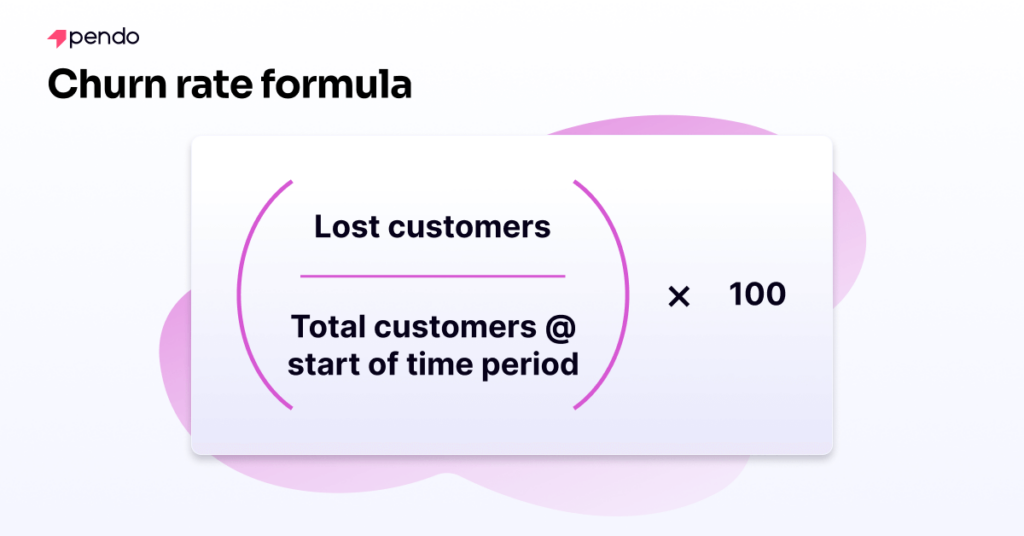
顧客チャーン率の計算は、思いのほか複雑です。「無料トライアルのユーザーを含める必要があるか?」「月ごとの契約は?」「更新の顧客のみを切り分ける必要はあるか?」など、さまざまなことを考慮する結果、SaaS企業によって「特定の期間に更新しなかった顧客の数」という一見わかりやすい質問への答え方は大きく異なってきます。
チャーンを計算するための競合する式は数多く存在するため、企業が選択する式よりも重要なのは、企業が一貫してベンチマークを行うことです。チャーンは目標が変わり得るKPIです。季節性、プロダクトの変更、競争要因、価格予想、カスタマーサポート、さらにはPRイベントの影響を受ける可能性があります。チャーンの計算式を定期的に変更すると、企業が顧客を失った原因を把握したり、ビジネスに変更を加えたりする能力が妨げられます。そのため、最初に指標を追跡します。
顧客チャーンの要因は何ですか?
すべての顧客チャーンを防げるわけではありません。会社が廃業したり買収されたりした場合、その顧客をチャーンから回避させられる可能性はほとんどありません。これは「構造的チャーン」と呼ばれます。構造的チャーンの反対は予防可能なチャーンです。このような場合、企業と意思決定者は、プロダクトまたはサービスを更新するかどうかを決定する際に、いくつかの一貫した基準を検討する傾向があります。検討する可能性があるのは次のような内容です。
- 価値:このプロダクトを使用するとどのようなメリットがあるか?最初に購入したときに期待したものが得られているか?
- 使用状況:このプロダクトをどのくらいの頻度で使用するか?これはミッションクリティカルな日常的に使用するアプリケーションか?それともあまり使用しないが持っていたら便利なアプリケーションか?
- 関係:プロダクトの背後にいる人々に対してどの程度親しみを感じるか?カスタマーサクセスチームと社内のチャンピオン(擁護者)の間に強い絆はあるか?この会社のプロダクトに愛着があるか?
- 代替案:問題を解決する他の方法はあるか?代替案を頻繁に使用するか、それとも代替プロバイダーとの関係を強化するか?
顧客チャーンを予測する方法
Predicting customer churn requires two things:
- Understanding of your customers’ interactions with your brand. You can do this with a session replay tool!
- Key operational metrics like product usage data. Pendo product analytics software is perfect for this!
By unifying your data, businesses can identify early indicators of churn and develop proactive strategies to retain customers. A less manual way would be to use something like Pendo Predict which is a AI churn prediction software.
What is churn prediction software?
Churn prediction software uses AI and machine learning to analyze customer behavior, product usage, and engagement data to identify which customers are at risk of churning. Unlike manual health scores, modern customer churn prediction software does not take signifcant time and resources to set up and continuously learns from patterns across thousands of data points to deliver accurate, actionable predictions.
The best churn prediction tools provide:
AI-powered predictive models that analyze product usage, engagement patterns, and customer attributes in real-time—identifying at-risk customers 3-6 months before renewal.
Explainable predictions that show not just who will churn, but why—pointing to specific usage patterns, feature gaps, or engagement drops that indicate risk.
Integrated workflows that deliver insights directly into existing tools like Salesforce, HubSpot, and in-app guides so teams can act immediately.
Continuous learning through models that automatically retrain themselves as customer behavior changes, improving accuracy without manual maintenance.
Pendo Predict is an AI-powered churn prediction platform that builds predictive models from your product and CRM data—all without requiring a data science team. It identifies both churn risk and upsell opportunities, delivering insights directly into your team's workflows.
Traditional vs. AI churn prediction methods
Traditional approaches rely on manual scoring systems using basic metrics like login frequency or support tickets. These rule-based health scores (red/yellow/green) require constant updates and miss nuanced patterns.
AI churn prediction software analyzes hundreds of data points simultaneously—product usage, feature adoption, engagement trends, CRM signals, and support interactions. These predictive AI models continuously retrain and improve accuracy over time without manual intervention.
The key advantage: AI identifies subtle behavioral patterns humans would never spot, providing probability scores (e.g., "78% likely to churn") with specific reasons for each customer's risk level instantly.
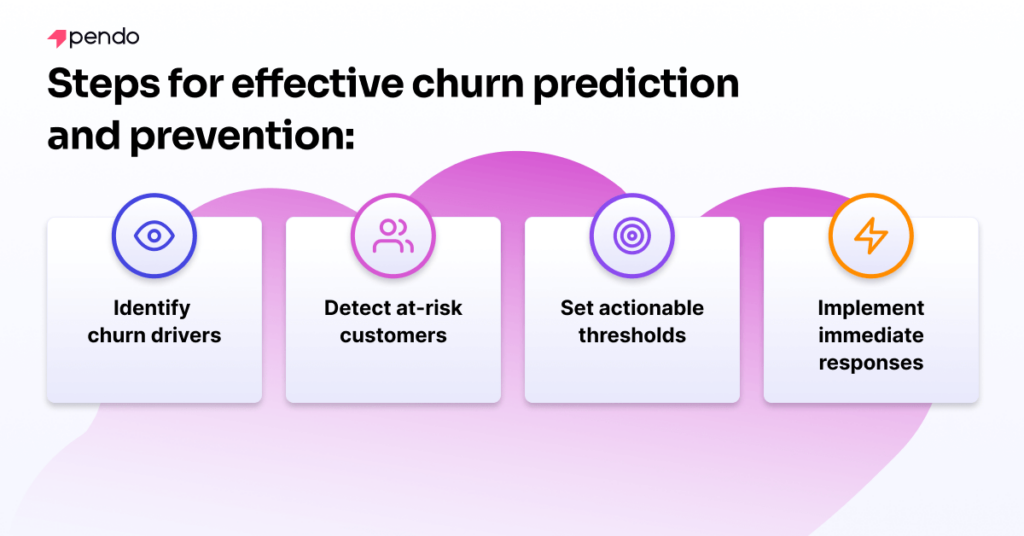
チャーンを予測して防止するための重要な4つのステップは次のとおりです。
- チャーン要因を特定する:定性的、定量的、視覚的なデータを分析し、顧客の離脱につながる具体的な行動や要因を理解します。
- 解約リスクがある顧客を検出する:予測分析を活用して、顧客が離脱を検討している可能性を示すパターンやシグナルを認識します。
- 実行可能なしきい値を設定する:チャーンのリスクを計算した上で、いつリテンション活動を開始するかの具体的な基準を決定します。
- 即時に対応を実施する:個別のフォローアップと介入を通じて、解約リスクがある顧客のニーズに迅速に対応するシステムを開発します。
プロダクトデータを活用したチャーンの検知と防止
チャーンを正確に予測するには、予測モデルを作成することが重要です。これには、プロダクトデータ(ユーザーの粘着率やフィーチャーの定着率など)と経験データ(ネットプロモータースコアやユーザーフィードバックなど)を統合することが含まれます。これらの組み合わせたデータセットを分析することで、モデルが各顧客のチャーンの可能性を評価できるため、企業は先制的に行動することができます。
Product experience platforms like Pendo make understanding your customer health dramatically easier. For a proactive approach, explore Pendo Predict, an AI-powered churn prediction tool that identifies at-risk users before they churn. Usage data, feedback, session replays, and more help you understand and segment users to pinpoint at-risk customers and craft personalized retention strategies.
With your product’s insights, companies can foresee potential churn and implement timely, targeted measures to improve customer loyalty and retention.
プロダクトエンゲージメントスコア(PES)で収益エンジンを予測する
Pendoのデータサイエンスチームは、PESだけで顧客が契約をチャーンするか、引き続き更新するか、拡大するかを予測できるかどうかを確認したいと考えていました。PESは顧客リテンションと強い相関関係があり、契約更新の数か月前ではPESが最も高いアカウントは更新したり拡大したりする可能性が最も高く、PESが最も低いアカウントは解約する可能性が最も高いことがわかりました。
顧客チャーンを減らし、既存顧客を維持する方法
顧客チャーンを減らすには、解約リスクがある顧客を救うだけでなく、カスタマージャーニー全体を通じて積極的にポジティブな体験を生み出す必要があります。ここでは、チャーンを減らし、顧客のエンゲージメントを維持するための重要な戦略を紹介します。
プロダクトと顧客体験を向上させる
- アプリ内ガイドや、役割ごとにオンボーディングをパーソナライズして自動化することで、サインアップとオンボーディングのプロセスを可能な限りシームレスで快適なものにしましょう。
- 顧客サポートが迅速かつ効率的になるようにし、サポートとフィードバックに簡単にアクセスできるようにしましょう。
- アプリ内のコミュニケーションを個人のニーズ、やるべき仕事、嗜好に合わせて調整することで、ユーザーにパーソナライズされた体験を提供しましょう。
顧客を教育し、力を与える
- アプリ内のツールチップ、ウォークスルー、デモ、ハウツーガイド、FAQなどの教育コンテンツをアプリ内リソースセンターから提供しましょう。
- ライブチャットやチャットボットを通じてアクセスしやすいサポートを提供し、ユーザーがアプリ内でフィードバックを共有できるようにしましょう。
- ソーシャルメディアやその他のチャネルでユーザーとつながり、顧客からの問い合わせや懸念事項にリアルタイムで対応しましょう。
ロイヤルティに報いてリピートビジネスを促進する
- 購入やインタラクションに対して顧客にポイントを付与するロイヤルティプログラムを導入し、特典と交換できるようにしましょう。
- リピーターに再来店を促すために、リピーター限定の割引や特典を提供しましょう。
- 特にロイヤルティの高い顧客向けに、自分が大切にされ、感謝されていると感じられるような追加の特典を提供するVIPプログラムを作成しましょう。
価値の高い顧客に感謝の意を表す
- 価値の高い顧客に感謝の気持ちを示すために、パーソナライズされた感謝状やオファーを送りましょう。
- 企業アカウントを限定イベントやウェビナーに招待すると、特別感や参加意識を持たせることができます。
- 顧客の嗜好や行動に基づいてカスタマイズされたオファーを提供し、顧客が自社のブランドで可能な限り最高の体験を得られるようにしましょう。
暗黙的、明示的なフィードバックに耳を傾け、それに応じて行動する
- アンケートやフォームを通じてアプリ内(およびアプリ外)で詳細なフィードバックを収集し、顧客体験に関するインサイトを取得しましょう。
- プロダクトエンゲージメントスコア(PES)などのユーザー行動データを分析して、チャーンの可能性を示すパターンを特定しましょう。
- センチメント分析ツールを使用して、顧客フィードバックを測定し、迅速に対応することで、顧客離れに先手を打ちましょう。
How Pendo helps predict and prevent customer churn
Pendo Predict: AI-powered churn prediction software
Pendo Predict specifically adds AI-powered prediction to identify which specific customers will churn and why—before it happens.
Generates predictions in days, not months: No data science team required. Automatically builds and trains predictive AI models from your product and CRM data.
Explains why each customer is at risk: Surfaces specific reasons like declining feature usage or reduced login frequency so teams know how to intervene.
Identifies upsell opportunities: Predicts both churn risk and expansion potential to focus efforts on retention and growth.
Delivers predictions into workflows: Integrates with Salesforce, Slack, email, and Pendo Guides for immediate action.
In addition to Predict, the rest of Pendo's comprehensive product experience platform gives teams even greater visibility into customer health:
- Product analytics: Track usage patterns that indicate churn risk like declining sessions or abandoned features
- In-app guides: Proactively educate at-risk users with walkthroughs to drive feature adoption
- Session replays: Identify friction points causing frustration before they drive cancellations
- Feedback collection: Capture sentiment through NPS and surveys to understand the "why" behind churn risk
By combining Pendo's behavioral analytics with Pendo Predict's AI churn prediction models, teams get both the "who" and the "why"—plus the tools to intervene effectively.
Explore Pendo Predict today!
What is a good customer churn rate?
For B2B SaaS companies, an annual churn rate of 5-7% or lower is considered healthy. Monthly churn benchmarks vary by segment:
- Enterprise B2B: Good is 1-2% monthly, great is under 0.5%
- SMB/Mid-Market B2B: Good is 2.5-5% monthly, great is under 1.5%
- B2C subscription: Good is 3-5% monthly, great is under 2%
The best measure is a rate that's trending downward and allows sustainable growth. Use churn prediction software to continuously improve retention metrics.
How can AI predict customer churn?
AI churn prediction uses machine learning to analyze patterns across product usage, engagement data, and customer attributes. These models identify subtle behavioral signals that precede churn—like declining feature adoption or changing login patterns—often 3-6 months before renewal.
Unlike rule-based systems, AI models automatically discover which combinations of signals are most predictive and continuously improve accuracy over time without manual intervention.
What's the difference between churn prediction software and health scores?
Traditional health scores use simple rules based on a few metrics (red/yellow/green). Churn prediction software uses AI to analyze hundreds of signals simultaneously, providing probability-based predictions (e.g., "78% likely to churn within 90 days") with explanations of which specific behaviors drive each customer's risk score.
AI-powered churn prediction is more accurate, requires no manual updates, and integrates predictions directly into workflows with recommended actions.
How to build a customer churn model?
Building a churn prediction model traditionally requires: data collection, cleaning and feature engineering (60-80% of work), model selection, training, validation, deployment, and continuous monitoring. This typically takes 6-9+ months and requires data science expertise.
Modern churn prediction software like Pendo Predict eliminates this complexity—automatically building production-ready predictive AI models in days rather than months, with zero data science resources required.
Can customer churn be negative?
Yes! Negative churn occurs when expansion revenue from existing customers exceeds revenue lost from churned customers. If you lose $10,000 in MRR from churned customers but gain $15,000 from upsells and expansions, you have negative churn of -5%.
Achieve this by focusing on land-and-expand models, using upsell prediction software to identify expansion-ready accounts, and implementing usage-based pricing that grows with customer success. Pendo Predict identifies both churn risk and upsell opportunities to help reach negative churn.